
Will a pumped hydro, which depends on two large water reservoirs to operate, succeed in semi-arid western fall country?
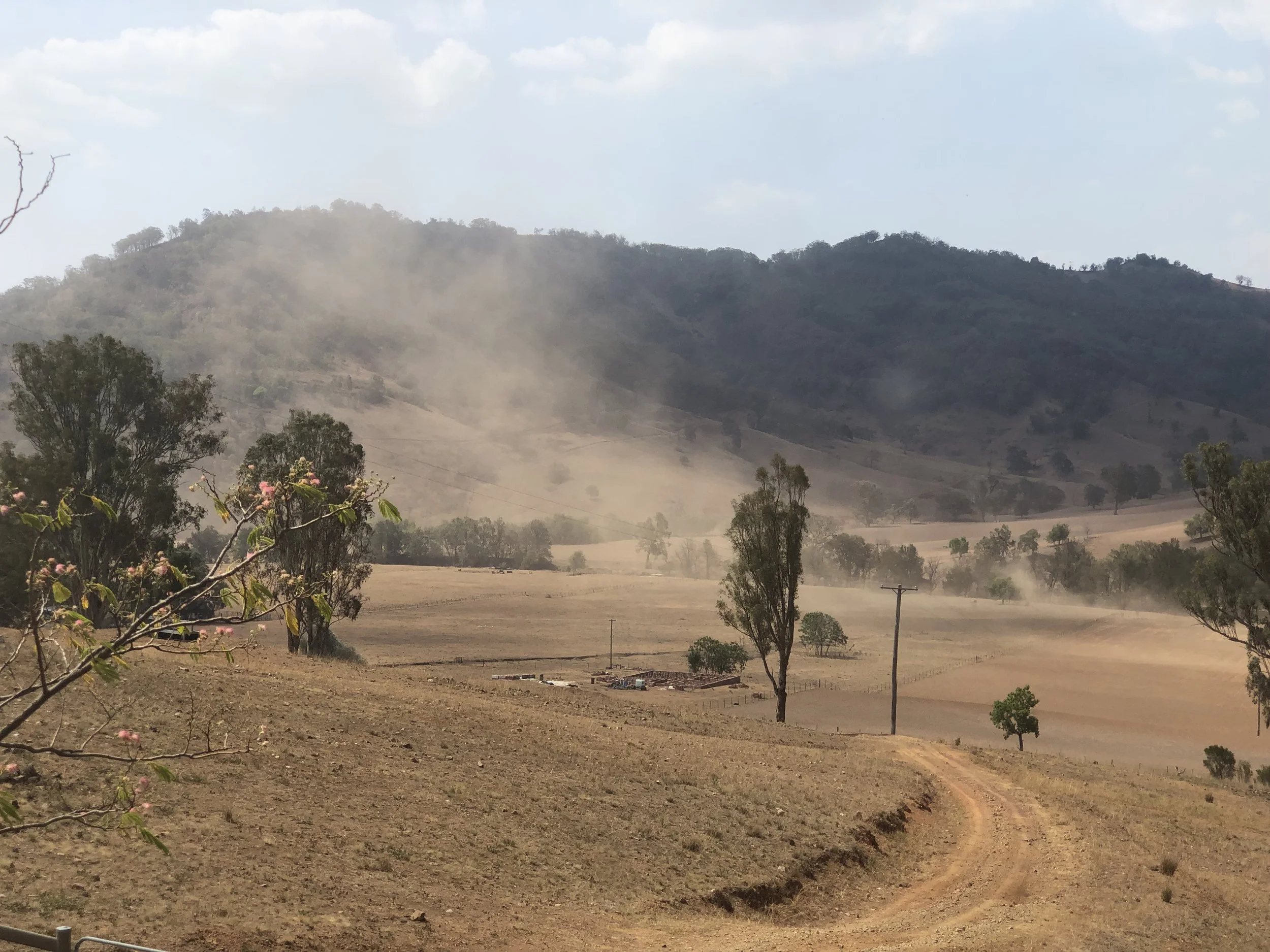
Image: Looking towards dry Dungowan Ck, Ogunbil, NSW at the end of the three year drought, 2019.
The site of the proposed pumped hydro energy storage at Ogunbil, NSW is on the western side of the Great Dividing Range. The range plays a critical role in Australia’s climate, water supply, agriculture, and as a refuge for wildlife, supporting over 70% of threatened species. Although the eastern side receives high average rainfall, the western side contrasts sharply, being considerably drier and hotter in summer due to the mountain range blocking moist Pacific winds. EDF’s project, which depends on two large water reservoirs to operate, has been poorly planned in a semi-arid zone affected by this rain shadow effect.
The residents of the Dungowan Valley understand exactly what living with climatic variability means.
The New England and North West is warmer and more variable than historically, with climate projections showing increasing temperatures, more hot days and heatwaves, and changes to rainfall patterns. That raises evaporation and reduces available runoff. Bureau of Meteorology long-term climate statistics show Tamworth has a seasonal rainfall pattern that is highly variable year-to-year—this is typical of semi-arid climates where multi-year droughts can occur and “average” rainfall can be a poor guide to future water supply.
The second half of 2025 has been among the wettest periods on record in the Dungowan Valley. However, this represents the opposite side of the pendulum swing from the severe drought of 2017–2019, which produced record-low multi-year rainfall totals for NSW and the Murray-Darling basin.
The PHES site is located immediately downstream of the existing Dungowan Dam, at the head of the the Namoi Valley water catchment which covers over 43,000 km2. At the end of 2025, the total accessible volume of water storage in the Namoi system is 911,757 megalitres. When the video (ABOVE) was taken in 2019, the total volume of water stored across the entire system—an area about the same size as Switzerland—was only 19,119 megalitres.
The 70-year-old Dungowan Dam is a small town-supply dam with a capacity of 6,300 megalitres, and it is fed by a relatively small catchment (~125 km²). That’s modest capacity for an urban and regional supply. It is one of only two critical sources of drinking water for the city of Tamworth (pop. est. over 66,000) while also supplying irrigation and livestock water to the valley’s farms. Recent drought records show that while the dam was at 100% capacity in mid-2017, it subsequently received no significant inflows and steadily declined thereafter.
The lowest available recorded level was 14.2% (894.6 ML) in March 2020—just after the drought had broken.
The situation was dire for Tamworth residents (under highest level emergency water restrictions) and farmers, with Dungowan Dam level below 50% for approximately two years, and the Dungowan Creek totally dry for much of that time.
Small catchment + small storage = sensitive supply.
A few dry seasons or a low-runoff year can quickly deplete storage in the dam because inflows are limited and evaporation losses proportionally high. This reduces reliability for both town supply and downstream users.
EDF’s pumped hydro project will require an initial fill of 3 to 4 gigalitres of water. Every year it will need to top-up its reservoirs with about 500 megalitres, due to evaporation which is conservatively estimated at 15% per year for this region. EDF Australia has stated that this water would be sourced by tapping into the pipeline that delivers essential drinking water from the Dungowan Dam to the city of Tamworth.
The psychological effects of going through hardship caused by Nature’s harsh extremes cannot be underestimated. Residents who have endured the traumatic effects of drought are highly sensitive about their access to water. If EDF connects to the drinking water pipeline, the next dry period could fuel the perception that the pumped hydro is prioritising its own needs over those of the community. This project risks damaging EDF’s reputation in Australia, as it could be seen as profiting from the diversion of essential drinking water away from rural communities.
Tamworth Regional Council stands to undermine public trust if it approves a proposal enabling a foreign company to profit from the diversion of critical drinking water.
Any proposal to use Dungowan pipeline water for industrial projects (e.g., pumped hydro reservoirs) would compete directly with domestic and agricultural uses, and in dry spells could exacerbate restriction levels for residents — creating practical shortages and provoking strong community backlash against Council. tamworth.nsw.gov.au
Risk factors specific to pumped-hydro proposals
Water top-ups: Pumped hydro needs regular top-ups to replace evaporation. A project that connects to town-water pipe is therefore exposed to system stress. In dry years there won’t be surplus water to top-up the facility’s reservoirs, so either the project can’t operate at full capacity or it competes with households and farms for water.
Revenue top-ups: In drought, the pumped hydro might be unable to top-up its reservoirs, so taxpayers might have to top-up EDF’s revenue instead. If the government guarantees EDF an annual income, then residents enduring harsh water restrictions could simultaneously see their tax dollars flowing to EDF —a significant social and political risk. WaterNSW